For my fifth-semester thesis at the Amsterdam Fashion Institute, I researched how social justice-related brand activism in fashion influences consumers’ intention to boycott. My interest in this topic emerged after seeing advertisements encouraging consumers to boycott certain brands because of their position in global conflicts. This led me to investigate which factors within brand activism influence consumers’ intention to boycott.
Research poster developed as part of the thesis, summarising and visualising its key findings
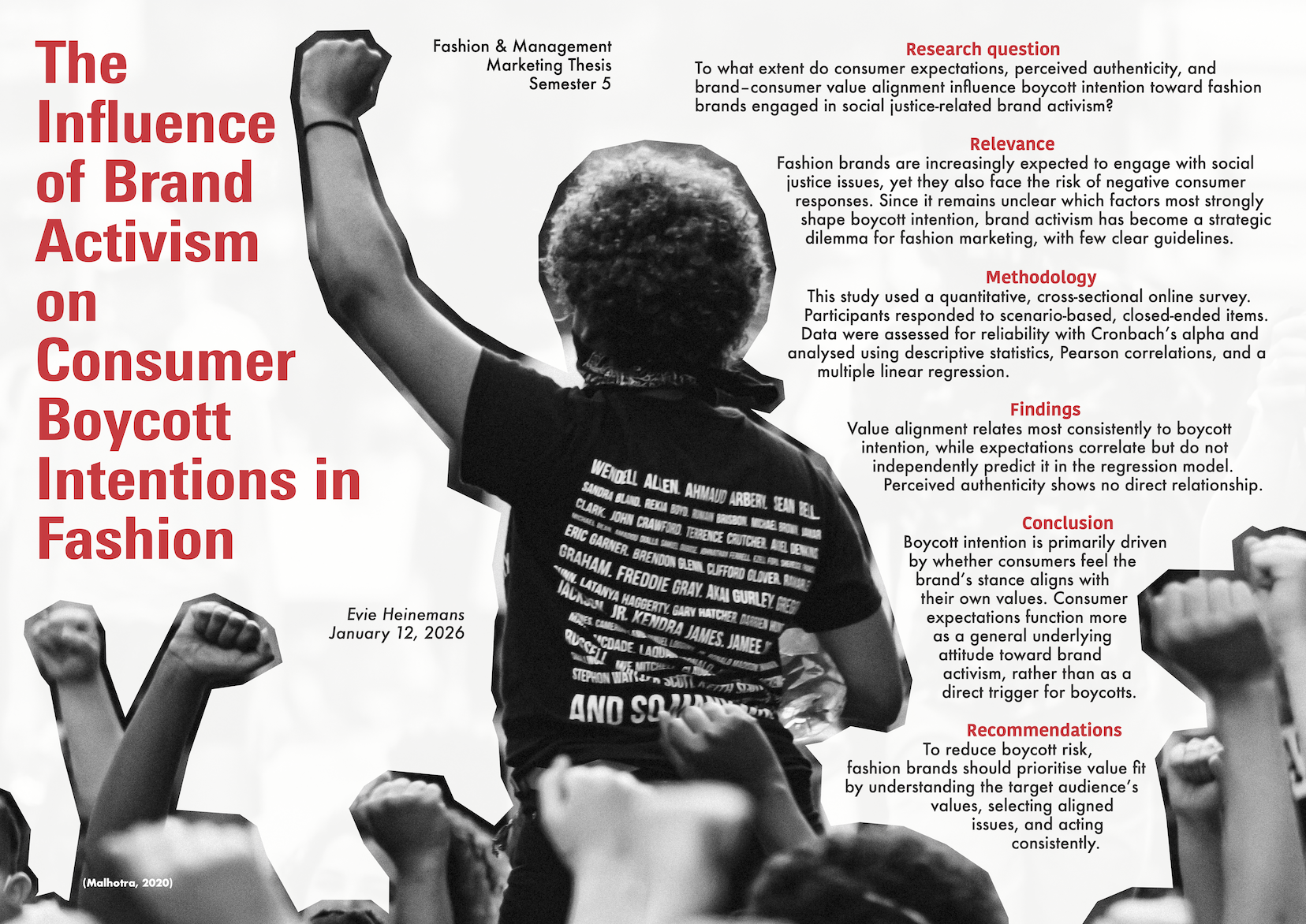
Before starting the research, a literature review was conducted to build a theoretical framework for the study. This review focused on existing research on brand activism and consumer behaviour, identifying the main factors influencing boycott intentions. These factors were then selected and applied as the key variables in my own research.
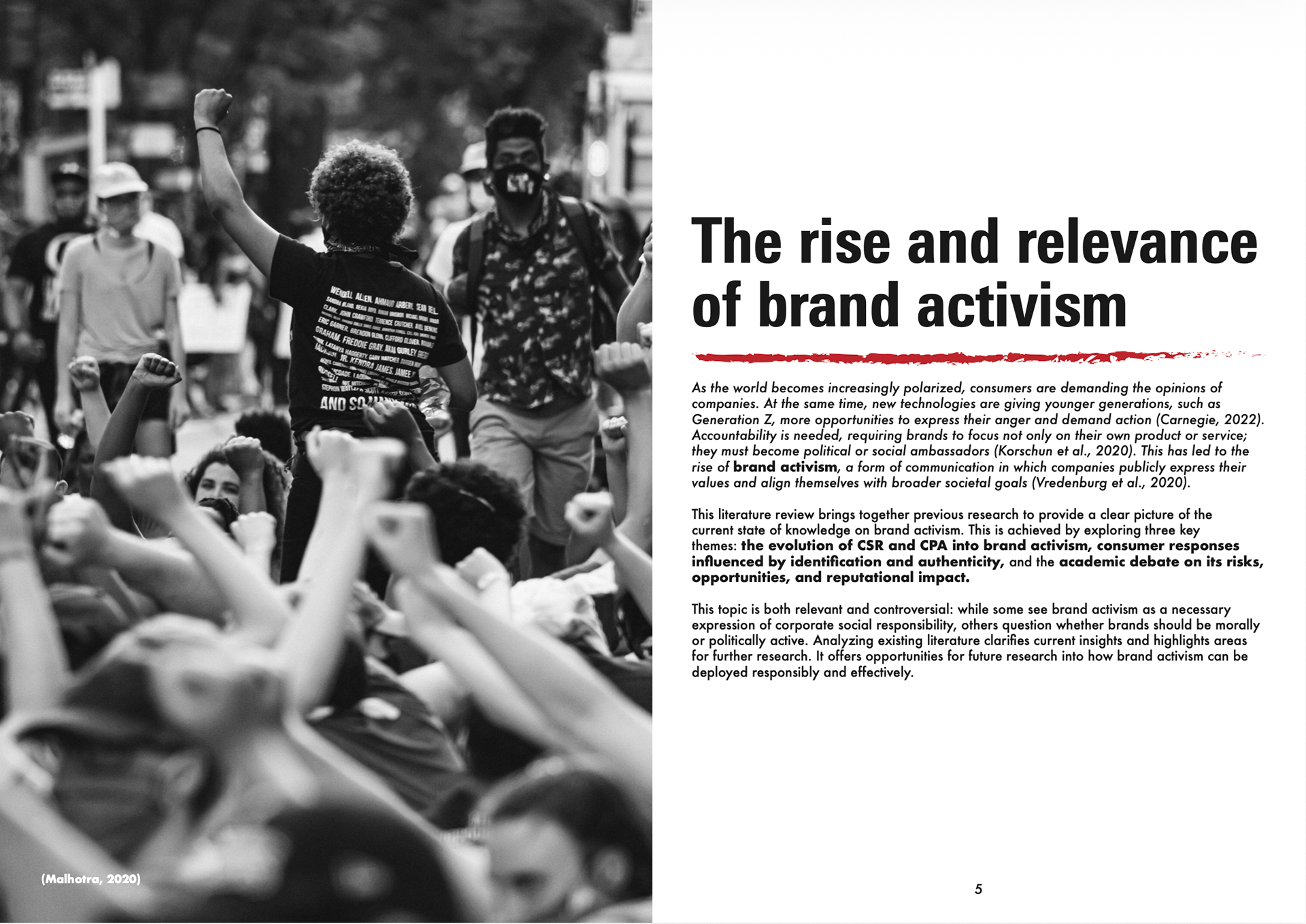
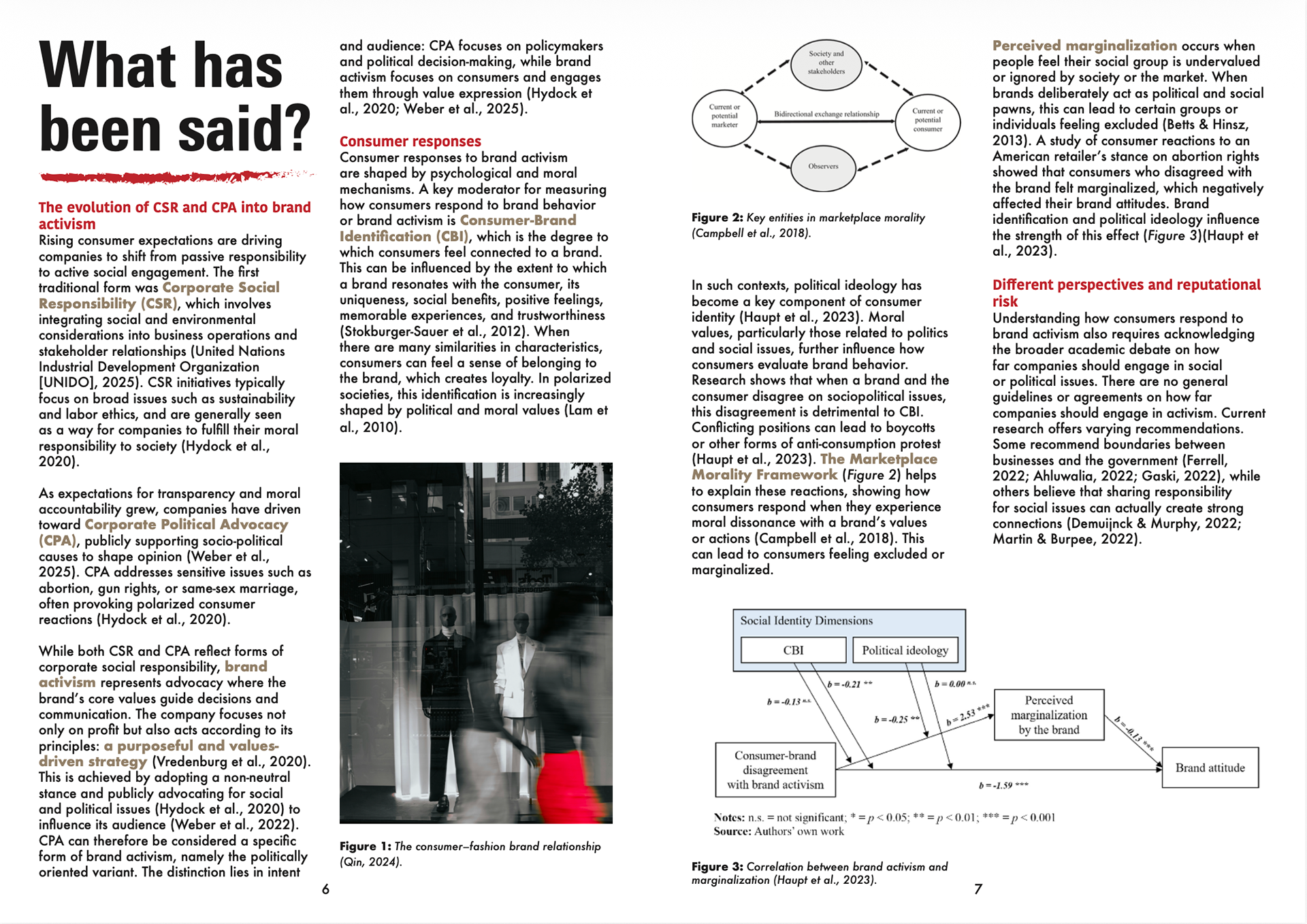
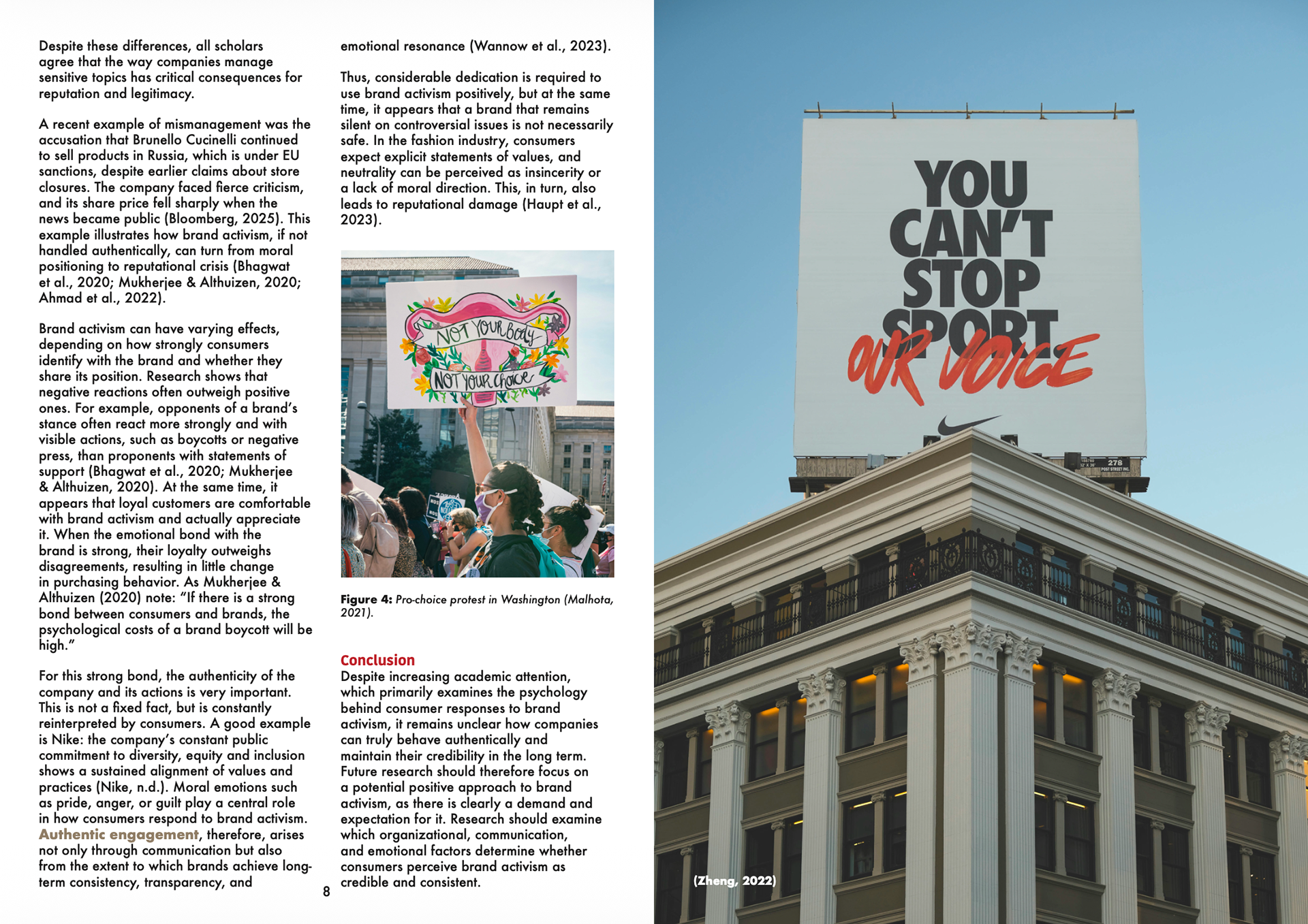
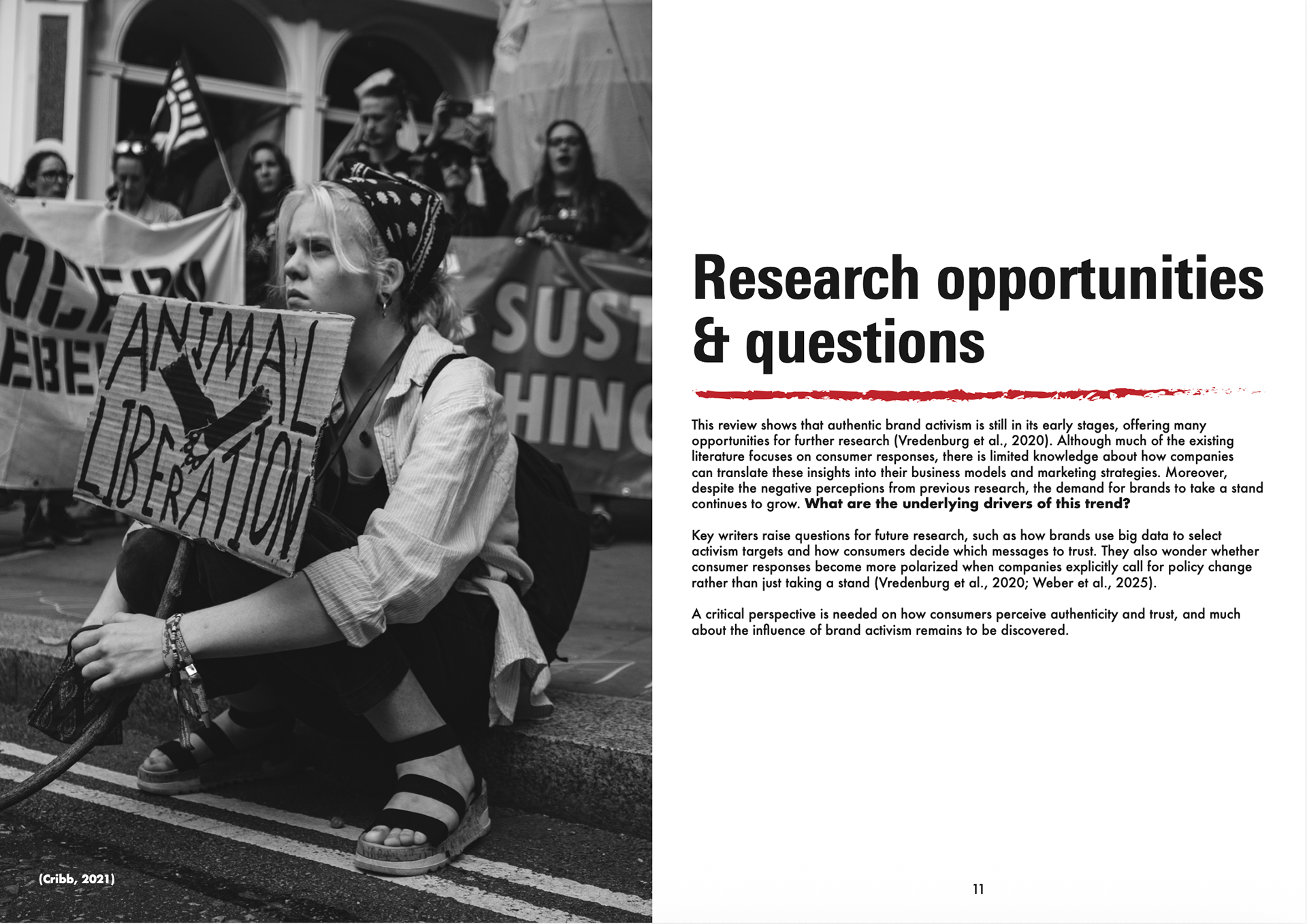
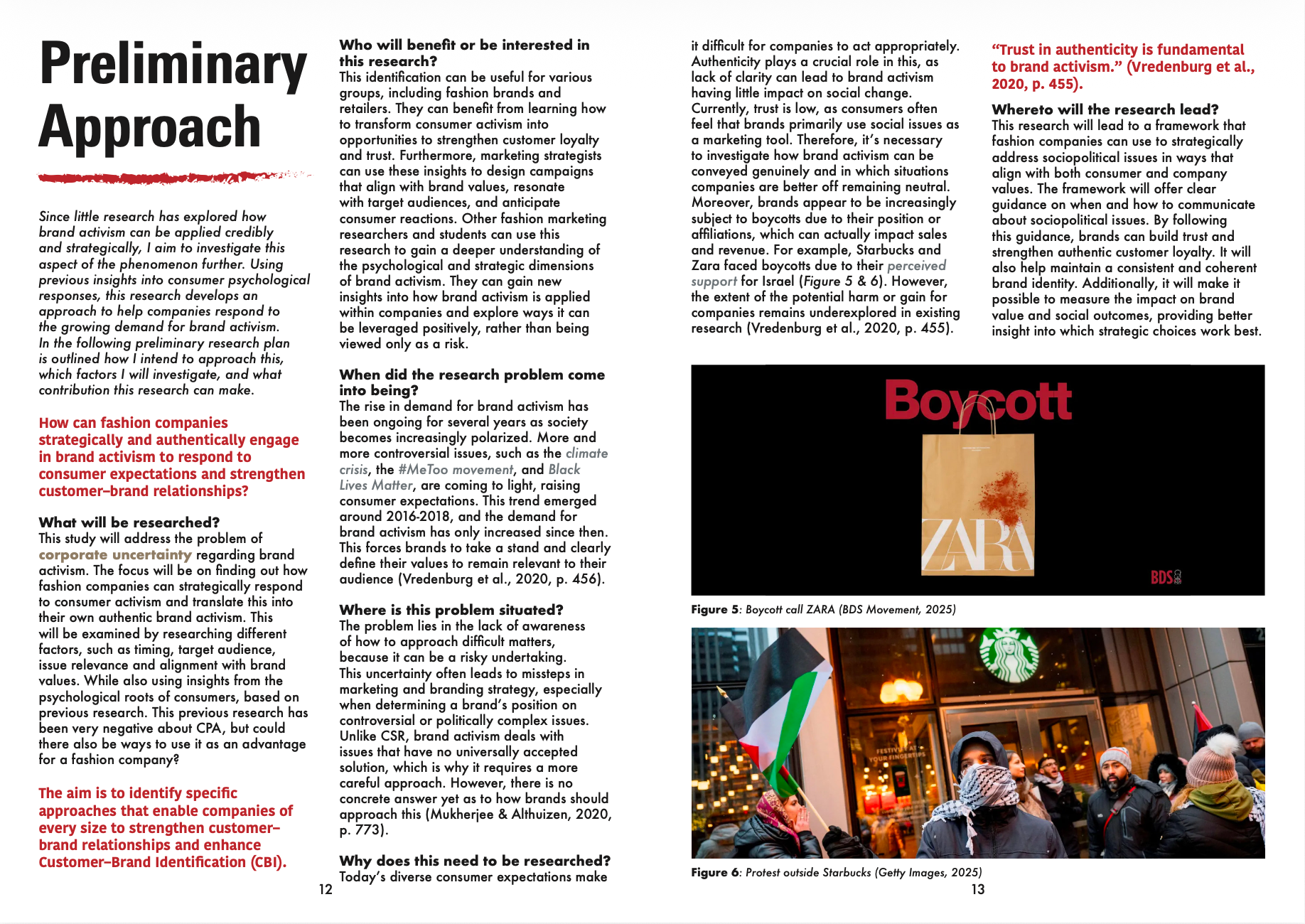
Excerpt from the thesis, including the introduction and conclusion.
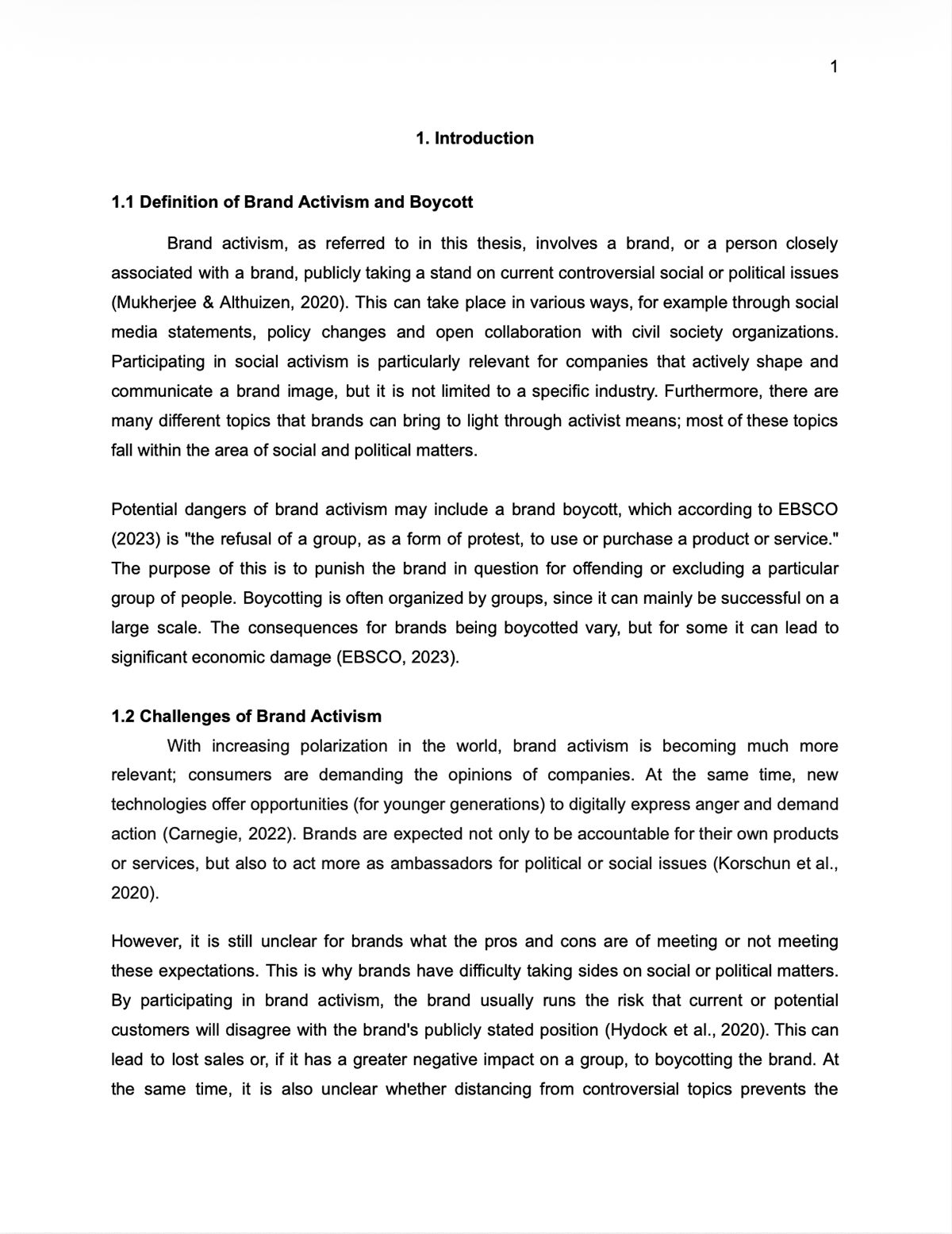
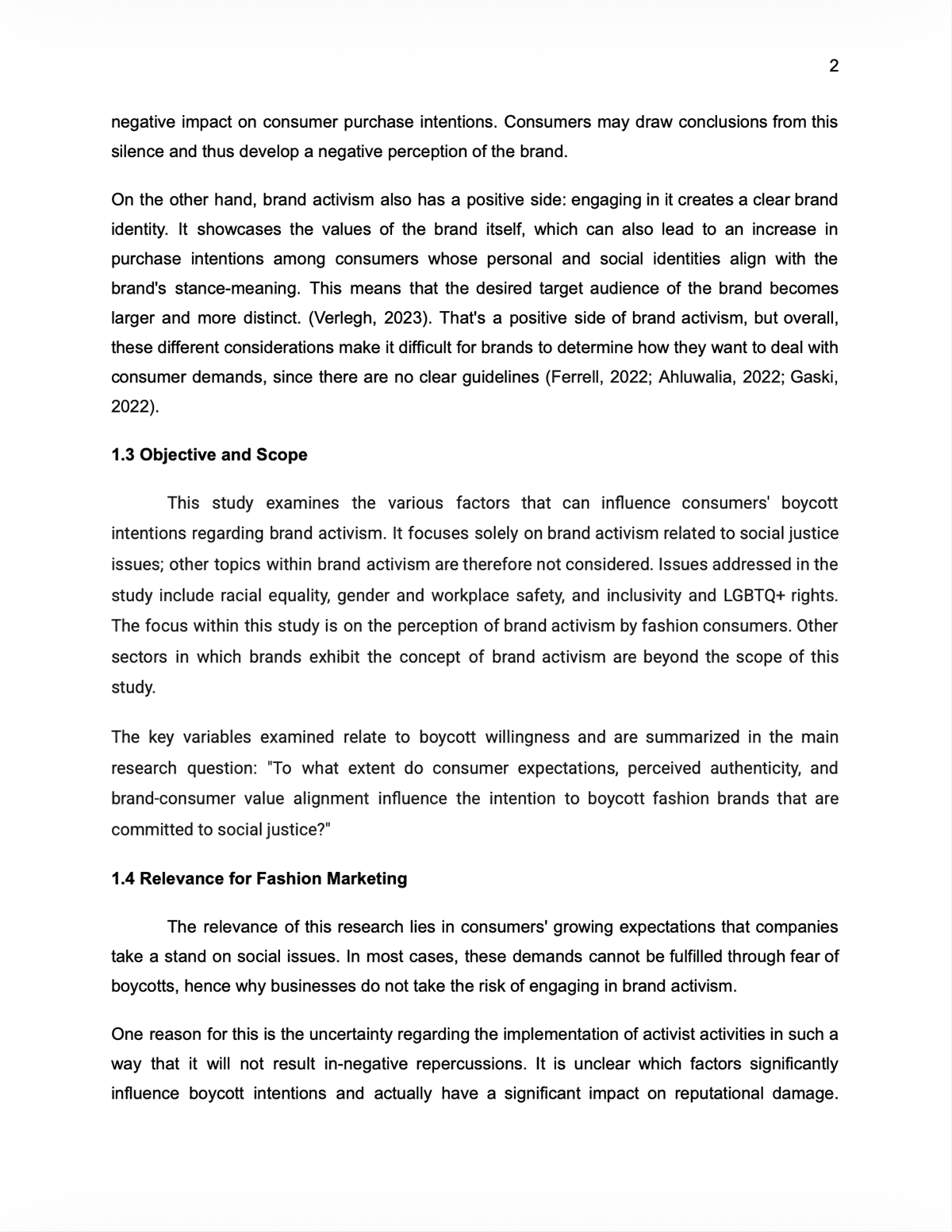
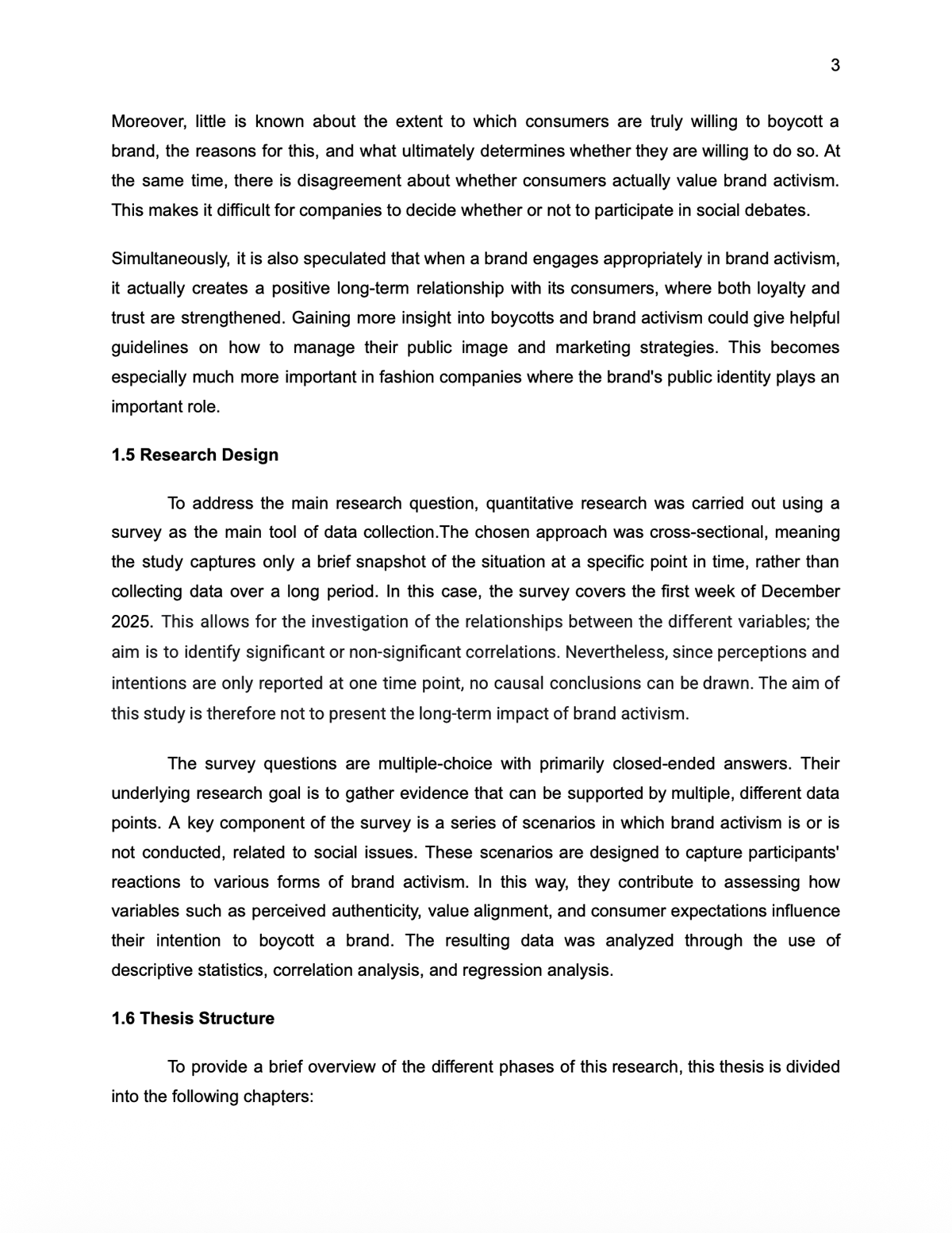
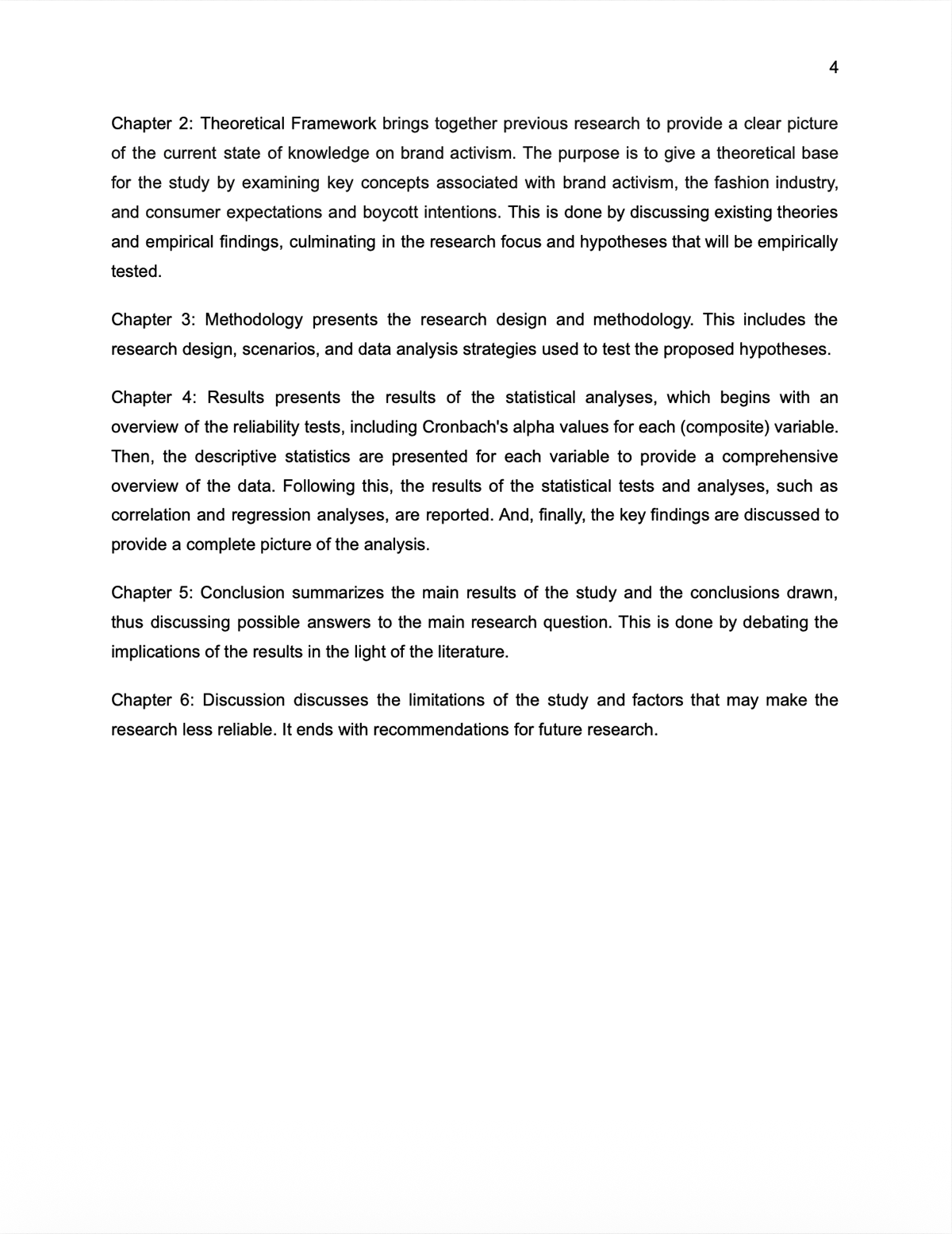
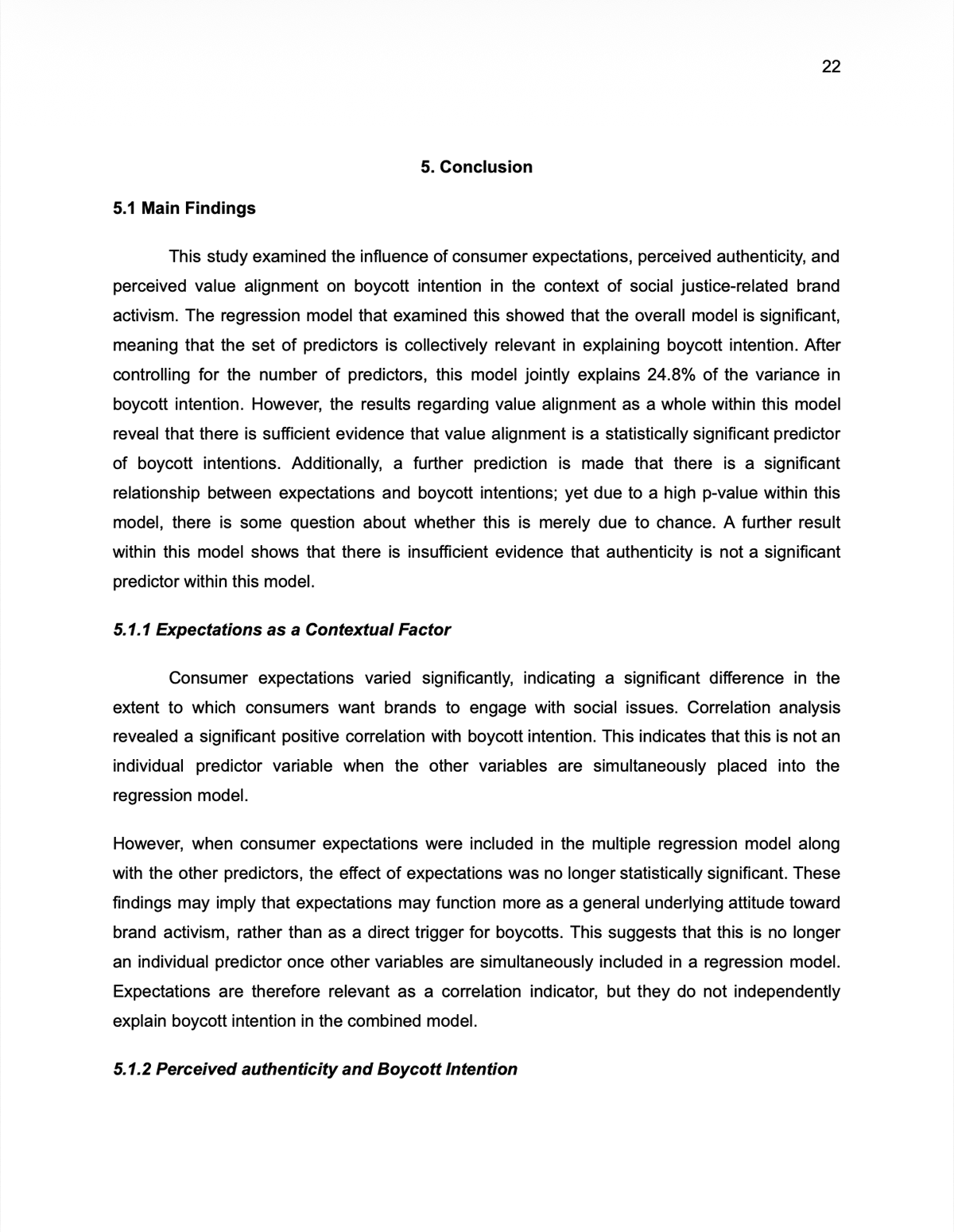
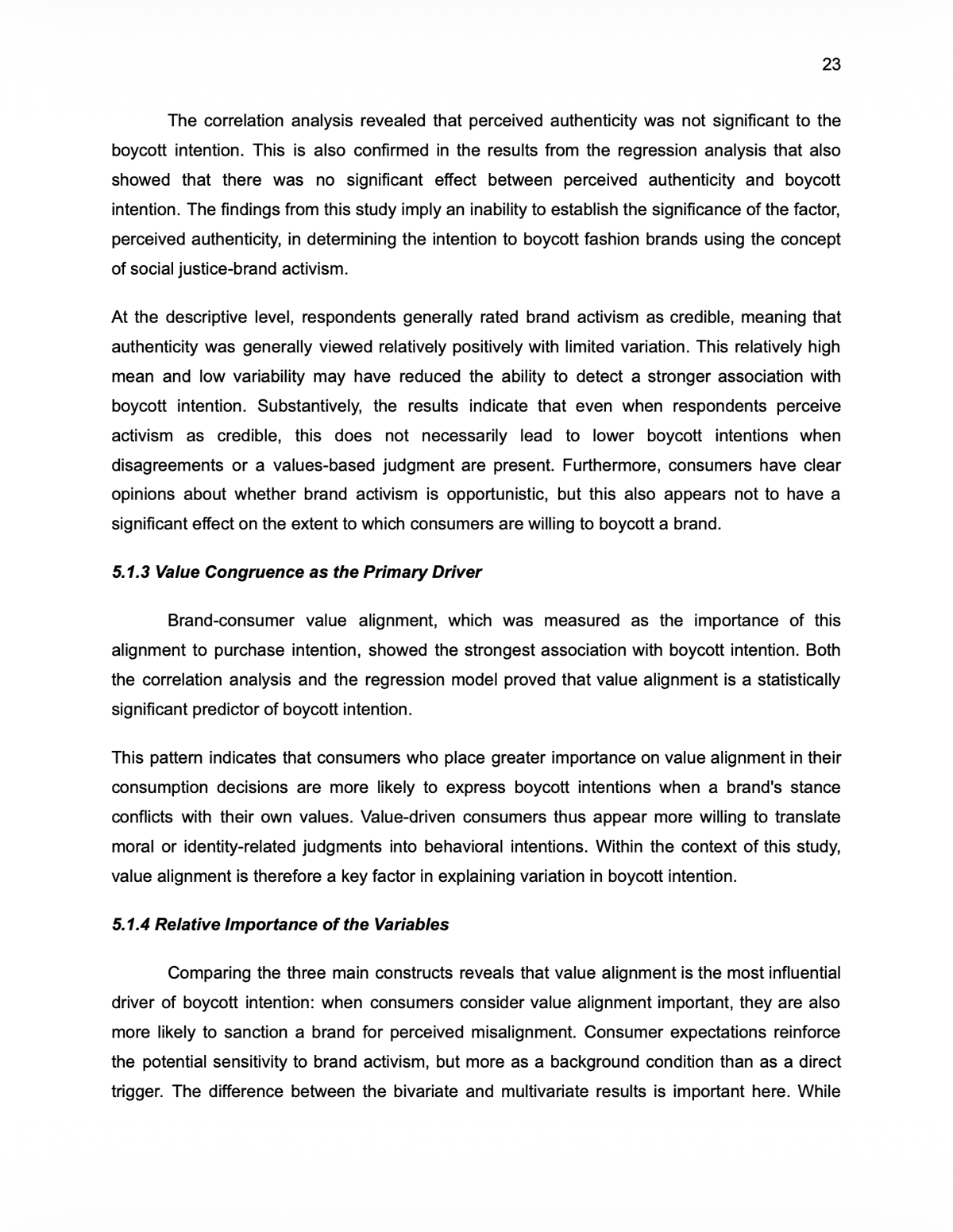
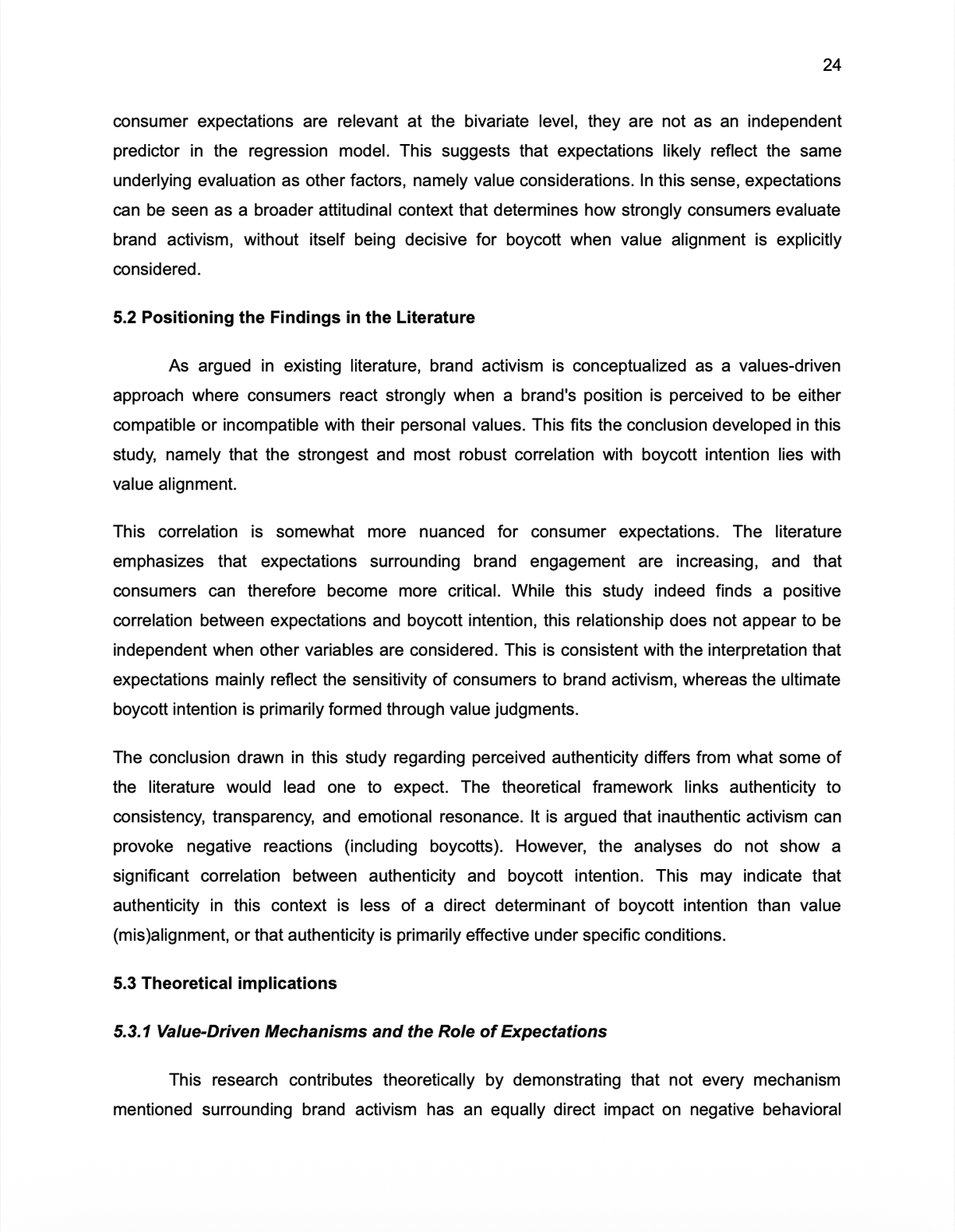
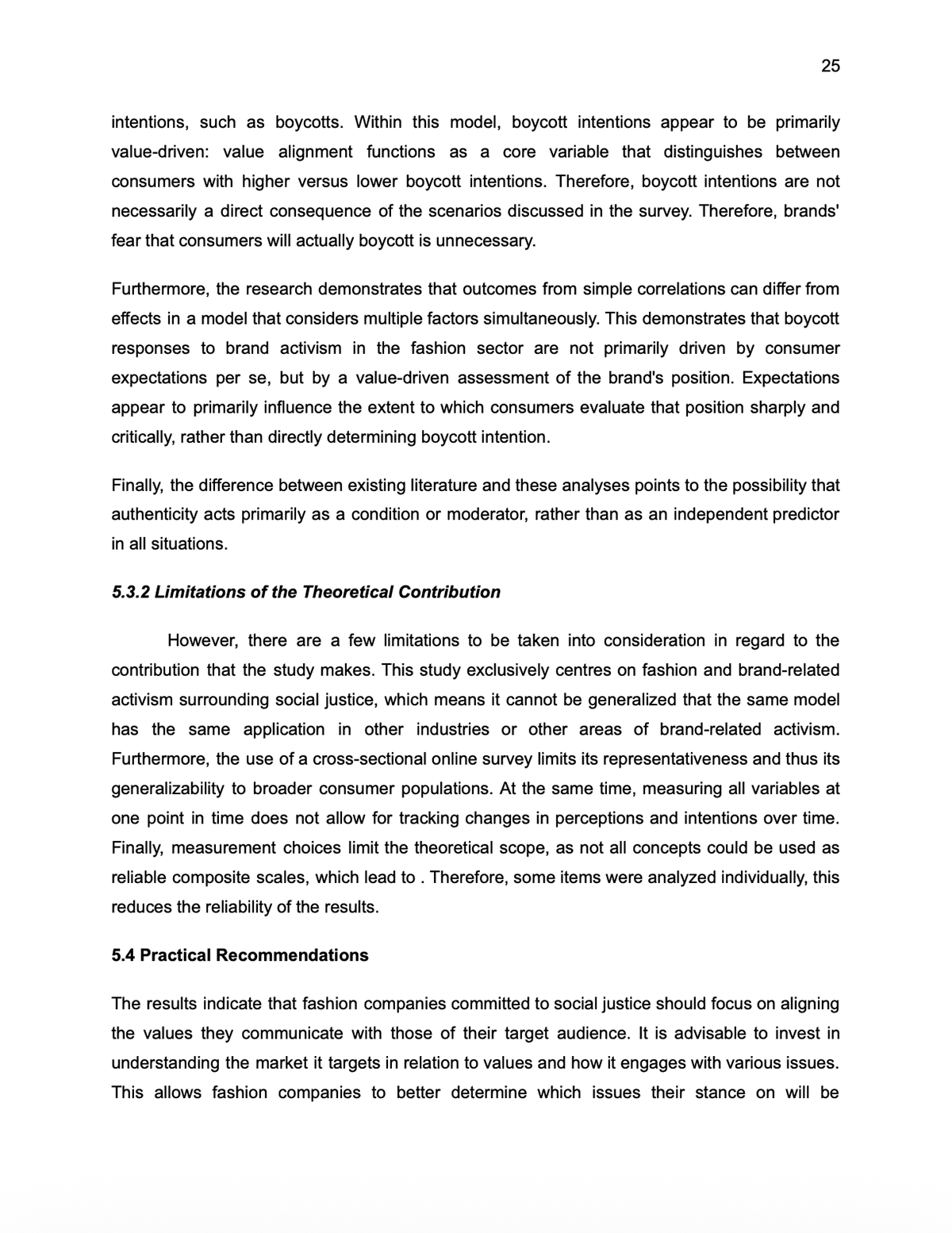
Overall, the main takeaway of my research is that boycott intention is primarily driven by brand-consumer value alignment. The research, however, also showed that though consumers expect brands to engage in brand activism, this does not necessarily mean that they will boycott the brand if these expectations are not met. Beyond the insights, the project strengthened my skills in quantitative research design, SPSS data analysis, and professional academic writing, while also encouraging critical reflection on methodological choices and their impact on interpreting results. This research deepened my understanding of audience, context, and the responsibility brands carry when choosing to speak up or remain silent.
Read the whole thesis here: